
Introduction
Windows account for up to 30% of a home’s heating and cooling energy loss — and in most houses built before the 1990s, single-pane glass is the silent culprit. Double-pane insulated glass units (IGUs) were engineered specifically to fix that problem, and they’ve since become the global standard in residential and commercial glazing.
But “double-pane” is not a single product. It’s a system — and the performance gap between a well-specified IGU and a poorly made one can be enormous. A high-quality IGU with argon gas fill and low-emissivity coating can cut window-related heat transfer by more than 50% compared to a basic double-pane unit, let alone single glass.
This guide breaks down exactly how IGUs are constructed, what drives their performance, how to compare them, and which mistakes homeowners and builders most often make when selecting them. Whether you’re replacing windows in an older home or specifying glass for new construction, this is your reference.
What Is a Double-Pane Insulated Glass Unit?
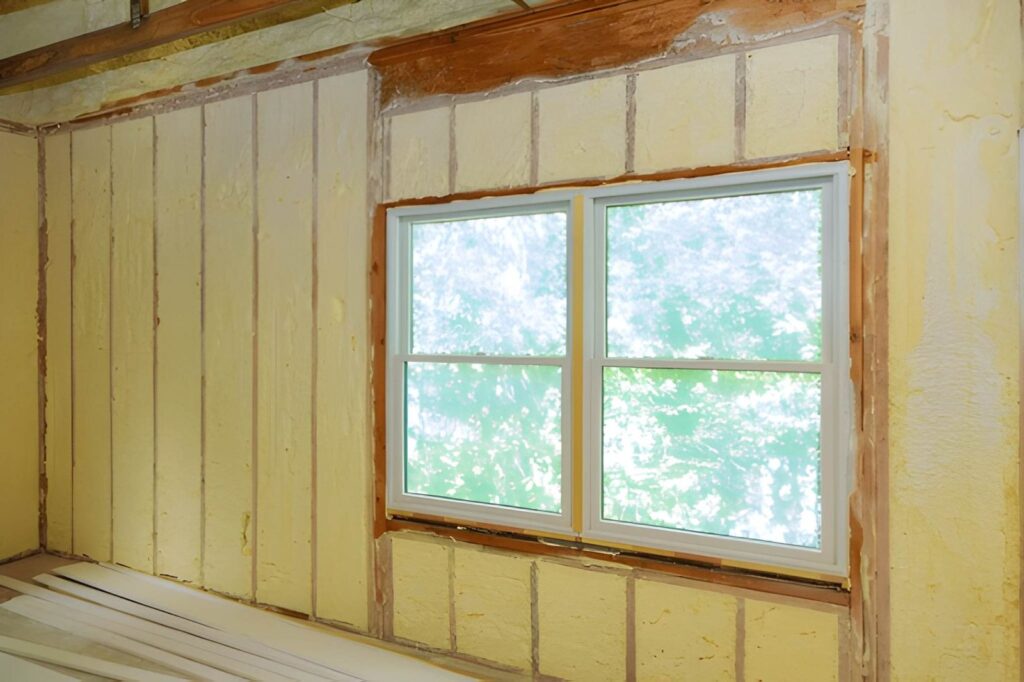
A double-pane insulated glass unit is a sealed assembly of two glass panes separated by a spacer, with the gap between them filled by a gas — typically air, argon, or krypton — that acts as a thermal buffer. The entire assembly is hermetically sealed at the edges to prevent moisture infiltration and gas leakage.
Snippet-ready definition: An IGU (Insulated Glass Unit) is a factory-sealed window assembly consisting of two or more glass panes held apart by a spacer bar, with the interpane cavity filled with an insulating gas, and the perimeter sealed to create a stable thermal barrier.
The concept is deceptively simple, but the engineering behind a high-performance IGU involves precise tolerances in glass thickness, spacer material, gas fill percentage, and edge sealant chemistry.
The Core Components
- Glass lites: Typically 3mm or 4mm thick; can be tempered, laminated, or coated depending on the application.
- Spacer bar: Holds the two panes apart and contains desiccant to absorb residual moisture. Aluminum spacers are common; “warm-edge” spacers made from foam or composite materials reduce conductive heat loss at the edge.
- Gas fill: Air is cheapest; argon (a denser, slower-moving gas) reduces convective heat transfer by roughly 16% compared to air; krypton performs even better in narrower cavities but costs significantly more.
- Edge sealant: A two-part system — a primary seal (usually polyisobutylene) that blocks moisture vapor, and a secondary structural seal (silicone or polysulfide) for durability.
- Low-E coating (optional but standard): A microscopically thin metallic oxide layer applied to one or more glass surfaces to reflect infrared radiation.
How Double-Pane IGUs Actually Work
Understanding the physics helps you make better purchasing decisions — and spot misleading marketing claims.
Three Modes of Heat Transfer (and How IGUs Address Each)
Heat moves through windows in three ways: conduction, convection, and radiation.
Conduction is heat flowing directly through solid materials. Glass itself is a decent conductor. The gas-filled cavity between the panes interrupts this path; gases conduct heat far less efficiently than glass or metal. This is why a wider cavity (up to about 16mm for argon) generally improves performance.
Convection happens when the gas inside the cavity circulates — warm gas rises, cools at the outer pane, and falls, creating a loop that continuously moves heat. Denser gases like argon move more sluggishly than air, reducing this circulation and cutting convective losses.
Radiation is infrared energy emitted by warm surfaces. Without a low-E coating, even a perfectly sealed air-gap IGU still allows significant radiant heat transfer. Low-E glass reflects this infrared back into the room in winter (or blocks solar infrared in summer), dramatically cutting radiant losses.
[PRO TIP: The U-factor of a window measures its total resistance to non-solar heat transfer — lower is better. A standard air-filled double-pane IGU typically has a U-factor around 0.48 BTU/h·ft²·°F. Add argon fill and low-E coating, and that figure can drop below 0.25 — a near doubling of thermal resistance.]
What the Gas Fill Actually Does
A common misconception is that the gas inside an IGU is primarily an insulator. It isn’t — its main role is to suppress convection. Argon’s higher density and lower thermal conductivity compared to air reduce convective circulation by around 16–20%, depending on cavity width. Krypton is more effective but typically reserved for triple-pane units or very narrow cavities (less than 9mm) where argon’s performance degrades.
A properly filled unit should contain at least 90% argon by volume. Below 80%, the performance advantage over air narrows considerably. Unfortunately, there’s no practical way for a homeowner to verify gas fill percentage after installation — making manufacturer certification critical.
Key Performance Metrics: How to Compare IGUs
Shopping for IGUs without understanding the rating system is like buying a laptop by case color. These are the numbers that actually matter.
U-Factor
The U-factor (or U-value) measures how much heat the window transmits per hour, per square foot, per degree Fahrenheit of temperature difference. The lower the U-factor, the better the insulation. Energy Star–qualified windows in the Northern U.S. climate zone typically require a U-factor of 0.27 or lower.
Solar Heat Gain Coefficient (SHGC)
SHGC measures the fraction of solar radiation that passes through the window into the interior — from 0 (no solar gain) to 1 (total transmission). The right SHGC depends on your climate and window orientation:
- Cold climates, south-facing windows: Higher SHGC (0.40+) to capture passive solar heat
- Hot climates or west-facing windows: Lower SHGC (0.25 or below) to reduce cooling loads
Visible Transmittance (VT)
VT measures how much visible light passes through. High-performance low-E coatings have improved dramatically — modern coatings can achieve U-factors below 0.20 while maintaining visible transmittance above 70%, meaning bright, clear views without compromising efficiency.
[PRO TIP: Ask your window supplier for the NFRC (National Fenestration Rating Council) label on any IGU you’re considering. This independently tested and verified label gives you U-factor, SHGC, VT, and air leakage data in a standardized format — the only apples-to-apples comparison available.]
Condensation Resistance (CR)
CR rates how well a window resists condensation on the interior surface, on a scale of 1 to 100. Higher is better. This matters particularly in humid climates or high-moisture spaces like kitchens and bathrooms. Warm-edge spacers significantly improve CR ratings by reducing the cold edge effect that causes perimeter condensation.
[INTERNAL LINK: window condensation causes and solutions]
Benefits of Double-Pane IGUs: What the Data Shows
Energy Savings
According to the U.S. Department of Energy, replacing single-pane windows with double-pane low-E windows can save between $126 and $465 per year in heating and cooling costs for a typical American home — depending on climate zone and fuel type. In a cold northern climate heating with natural gas, payback periods on Energy Star windows now routinely fall under 10 years, especially as energy prices rise.
Acoustic Insulation
The same gas layer that resists thermal transfer also attenuates sound. A standard double-pane IGU with a 12mm argon cavity reduces exterior noise transmission by approximately 28–32 decibels — a noticeable reduction in traffic and neighborhood noise. For enhanced acoustic performance, asymmetric glass thicknesses (e.g., 4mm + 6mm panes rather than two identical panes) disrupt sound wave resonance more effectively.
Comfort and Draft Reduction
Beyond raw energy numbers, IGUs eliminate the “cold glass effect” — the radiant chill felt near poorly insulated windows in winter. This allows furniture and seating to be placed near windows without discomfort, and reduces drafts caused by cold air falling from glass surfaces.
Reduced Condensation
Interior condensation on windows is not merely cosmetic. Persistent moisture at window frames promotes mold growth, wood rot, and degraded sealant. High-performance IGUs with warm-edge spacers maintain interior glass surface temperatures closer to room temperature, keeping surfaces above the dew point and dramatically reducing condensation events.
Common Mistakes and Myths About Double-Pane Windows
Myth 1: “All Double-Pane Windows Are Basically the Same”
This is perhaps the most expensive misconception in the window industry. The performance spread between a basic air-filled double-pane unit and a triple-silver low-E, argon-filled IGU with warm-edge spacers is enormous — often more than double the thermal resistance. The NFRC label exists precisely because marketing descriptions alone cannot be trusted.
Myth 2: “A Fogged Window Just Needs Cleaning”
Fogging or hazing between the panes is always a sign of seal failure — moisture has entered the interpane cavity. There is no cleaning solution for this. The only fix is replacing the IGU (the glass unit itself, which in most modern windows can be done without replacing the frame). Attempting to drill and “dry out” a failed unit is a short-term hack that accelerates frame damage.
Mistake: Ignoring Orientation When Specifying SHGC
Many homeowners order the same window specification for every side of the house. This is a significant efficiency error. South-facing windows in cold climates benefit from a higher SHGC to capture free solar heat, while west-facing windows in any climate should have a lower SHGC to prevent afternoon overheating. Consult the NFRC’s climate zone map and your local Energy Star requirements before specifying.
Mistake: Overlooking the Spacer Material
Most window quotes don’t mention spacer material — and most buyers don’t ask. Aluminum spacers are inexpensive but highly conductive, creating a “thermal bridge” at the edge of the glass where the majority of edge-of-glass condensation forms. Composite or foam-core warm-edge spacers reduce edge conductivity by 60–80% compared to aluminum, meaningfully improving condensation resistance and slightly improving overall U-factor. It’s an upgrade worth asking for by name.
[INTERNAL LINK: how to read a window NFRC label]
Myth 3: “Triple-Pane Is Always Better Than Double-Pane”
Triple-pane IGUs do outperform double-pane on U-factor, typically reaching 0.15–0.20 versus 0.22–0.30 for premium double-pane. However, they’re heavier, more expensive, reduce visible transmittance slightly, and the marginal energy savings in most U.S. climate zones below Zone 6 (northern Minnesota, Alaska, northern Maine) rarely justify the cost premium over a high-quality double-pane unit. The cost-benefit analysis depends heavily on your specific climate and heating fuel cost.
Choosing the Right IGU: A Practical Checklist
When comparing IGU options for a replacement or new construction project, work through these points:
- Confirm NFRC certification — never rely on manufacturer U-factor claims without independent verification.
- Match SHGC to orientation — specify different SHGC values for south/north vs. east/west exposures if your climate warrants it.
- Specify argon fill and verify fill percentage — ask for documentation; 90%+ fill is the target.
- Request warm-edge spacers — specify foam-core or structural foam composite; avoid standard aluminum spacers in cold-climate or high-humidity applications.
- Confirm low-E coating type — “passive” low-E (higher SHGC) for cold climates; “solar-control” low-E (lower SHGC) for hot climates or high solar exposure.
- Check warranty terms on seal integrity — most quality manufacturers warrant the seal (against fogging) for 10–20 years; shorter warranties are a red flag.
- Verify glass thickness for acoustic needs — if noise is a concern, ask specifically about asymmetric lites or laminated glass in the IGU.
Conclusion
Double-pane insulated glass units are the single most impactful window specification decision you’ll make — but the word “double-pane” alone tells you almost nothing about actual performance. The gap between a basic and a high-performance IGU is defined by three things: the quality of the low-E coating, the gas fill specification, and the spacer material. Get those three elements right, and you’ll have windows that deliver measurably lower energy bills, quieter rooms, and a more comfortable interior for decades.
The three most important takeaways from this guide: First, always request and read the NFRC label — it’s the only standardized, independently verified performance data available. Second, match your SHGC specification to window orientation and climate rather than applying a single spec to the whole building. Third, don’t ignore the spacer — warm-edge spacers are an inexpensive upgrade with real, measurable benefits for both comfort and condensation.
Ready to upgrade? Start by pulling the NFRC ratings on your current windows and comparing them against Energy Star requirements for your climate zone. That comparison will tell you quickly whether replacement makes financial sense — and give you a baseline specification to beat.
What’s the single window-related problem costing you the most comfort or energy dollars right now? The answer shapes which IGU specification matters most for your situation.